This is the monthly edition of the Transport Workers Union’s Transportation Technology Newsletter. We aim to inform and educate our members, the labor movement, the public and policymakers about developments in transportation technology – and what the TWU is doing to ensure that new technology doesn’t undermine safety or harm the livelihoods of hard-working blue-collar workers. For suggestions and questions, please email ewytkind@gmail.com or adaugherty@twu.org.
ITEM OF THE MONTH
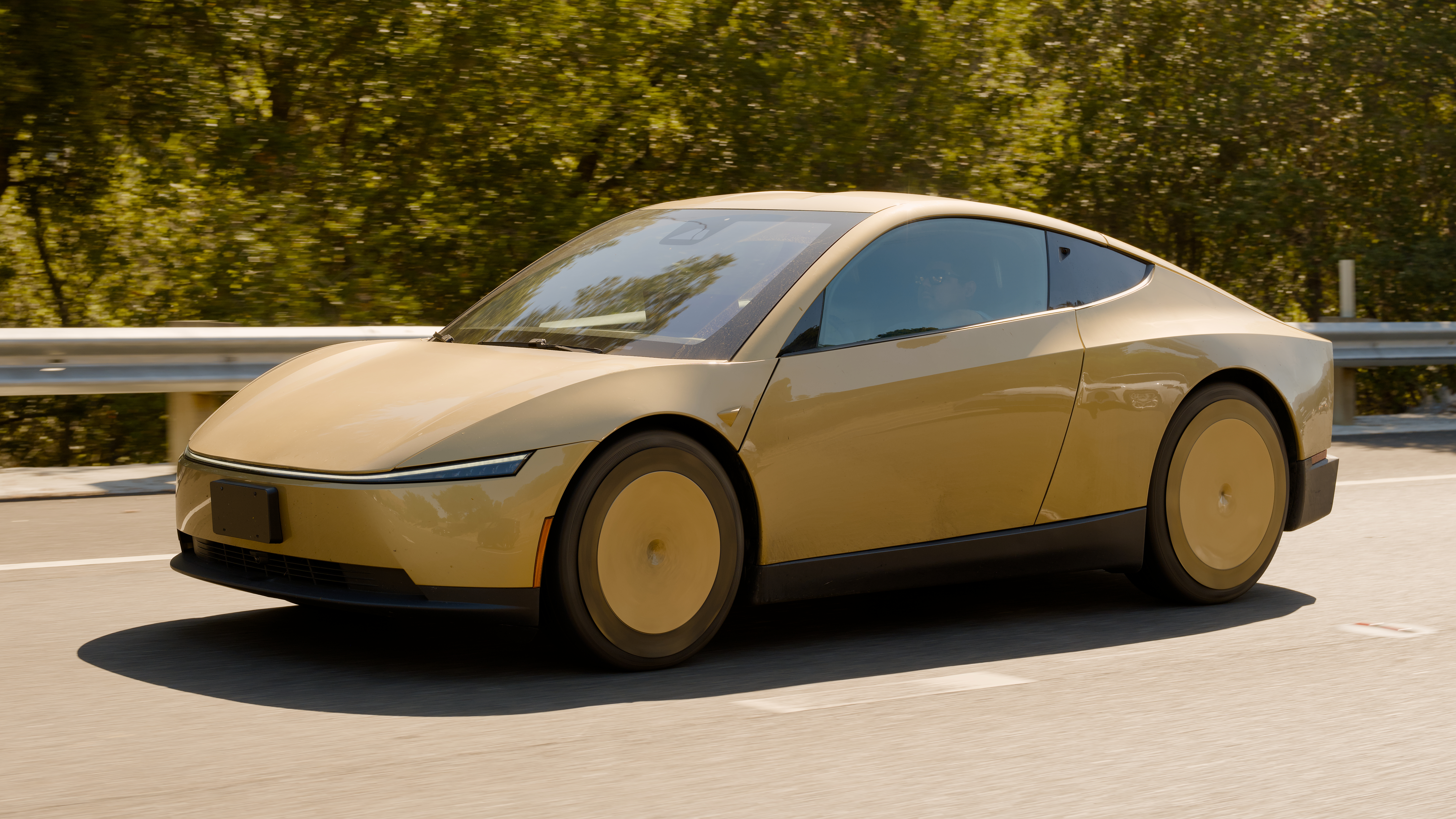
TESLA HEADACHE FOR FIRST RESPONDERS: First responders in Austin are being told by Tesla they may need to physically push disabled Tesla Cybercabs out of the way if they become obstacles, NBC News and Gizmodo report, because the robotaxis lack steering wheels and pedals. Tesla has self-certified the steering wheel-less and pedal-less Cybercab vehicles without seeing an exemption from federal regulators. The National Highway Traffic Safety Administration and Tesla did not respond to requests for comment from the Verge about their regulatory status.
“While Tesla presses on with paid rides, first responders are left to clean up the literal mess,” TWU International President John Samuelsen said. “The company released a half-baked manual essentially telling police and fire stations to figure it out themselves if a disabled autonomous Tesla is blocking public streets or causing a potential safety issue.”
The company is telling first responders that in some instances the Cybercab “can manually be moved with onboard vehicle controls” but also in certain situations “where there is a minimal risk of fire or high voltage exposure and low voltage power is present, Cybercab can be quickly pushed in order to clear the roadway.” The Cybercab’s curb weight is more than 3,100 pounds. And the company is instructing first responders to push the wheels with their hands to turn the car if needed.
“This is absurd,” TWU International Administrative Vice President Curtis Tate said. “Tesla is asking first responders to do something potentially dangerous with minimal instruction, all while playing fast and loose with federal regulators. Our streets should not be testing grounds for companies that are trying to make money first and thinking about safety second. Federal regulators need to step in before this becomes a bigger problem.”
ASLEEP AT THE WHEEL: Tesla is also facing scrutiny for owners posting videos on social media of them napping while their cars are driving, with Rep. Raja Krishnamoorthi (D-Ill.) writing a letter to NHTSA asking if they are aware of at least 43 videos of individuals asleep in the driving seats of moving Teslas. The lawmaker is asking if NHTSA has evaluated Tesla safeguards when the cabin camera is visibly impaired, obstructed, or drivers use sunglasses or hats to interfere with detection. In 2019, Elon Musk publicly proclaimed that Tesla drivers “will be able to sleep at the wheel by the end of 2020.” Photos and videos of sleeping Tesla drivers continue to pop up on social media.
WHAT ELSE IS COOKING
YOU CAN’T ARREST A CAR: Popular Science wrote a story echoing a major concern of the TWU as driverless vehicles are deployed on public streets – they do not face the same accountability a human driver does when they make poor decisions. While Waymos are racking up parking tickets across the country, it isn’t clear to most local municipalities how to sanction cars without drivers. “In principle, AVs are licensed drivers and someone owns and operates them,” University of Southern California Gould School of Law professor Gregory Keating told Popular Science. “They should be treated like any other licensed driver. In practice, I don’t know what’s going on.”
While parking tickets are one matter (and a major public nuisance), dangerous moving violations that would result in hefty fines or potential arrests for a human driver are more complicated. Popular Science reports that police in San Bruno, California conducting a DUI operation watched a Waymo make an illegal u-turn in front of them. When they pulled the Waymo over (not necessarily a given because there have been reports of AVs not responding to the flashing lights of emergency vehicles), they did not issue a citation.
“Since there was no human driver, a ticket couldn’t be issued (our citation books don’t have a box for ‘robot’),” a San Bruno Police Department Facebook post explained following the incident. “That’s right… no driver, no hands, no clue.”
“Big Tech is used to operating by a separate set of rules than the rest of us, and moving violations are the latest example,” Tate said. “If I drive my car in a dangerous manner and get pulled over, I could lose my license and even end up in jail. But if an autonomous vehicle does the same thing, there’s zero accountability.”
STORAGE PROBLEM: Mission Local reports that autonomous vehicle companies are on a collision course with San Francisco’s development goals – namely that they’ve bought or leased huge swaths of downtown real estate to store and charge their vehicles while the city has higher land use aspirations for valuable real estate than parking lots. Autonomous vehicle advocates have long discussed how constantly roving AVs would reduce the need for parking, but the vehicles still need to be charged and serviced (by human workers, mind you).
“AV storage is an annoyance at best and actively harmful to our cities at worst,” Samuelsen said. “Robotaxis meant to ferry the rich around are no substitute for human-operated mass transit systems, and the curb space and parking required in dense cities like San Francisco and New York significantly roll back the so-called benefits of AVs that Big Tech bros like to evangelize.”
AIRPORT RIDES IN VEGAS: Driverless vehicle operator Zoox, an Amazon company, is launching its first airport transportation service to and from the Las Vegas strip in September deploying four-passenger driverless robotaxis.
This new service is the result of federal transportation officials granting Zoox an exemption from safety requirements so it can use vehicles without a steering wheel, pedals or safety features like windshield defrosting. According to Zoox, it plans to expand robotaxi service to 10 additional markets including Houston, where TWU members work in the transit system.
“What could possibly go wrong when federal safety officials grant premature exemptions from our safety rules so that Amazon can cash in on its big bet on autonomous vehicles?” Samuelsen said. “A lot can go wrong: robotaxis have driven into crime scenes and flood zones and been caught speeding by school buses. We should not unleash them on Las Vegas roads and naively believe nothing will go wrong.”
Thanks to generous authority granted to Zoox, Waymo, Tesla, and Uber by the Nevada Transportation Authority, existing permits could result in up to 8,000 robotaxis traversing the county in the next year.
AIR TAXIS IN TEXAS: The expansion of air taxi services is accelerating as two well-financed industry leaders, Joby and Archer, take aim at Texas markets. The two companies, benefiting from major airline and manufacturer investments, are deploying their version of electric vertical takeoff and landing aircraft (eVOTL).
Joby has started Federal Aviation Administration (FAA)-approved demonstration flights this month in Dallas-Fort Worth while Archer advances test flights into new markets and plans for an air taxi charging network in North Texas, Houston, Austin and San Antonio. Archer is also growing its market reach through the acquisition of three units from Boeing, a major investor in the eVOTL sector.
Editor note: A study from Hunter College referenced in last month’s edition was updated by the authors after pressure from Waymo. Read more about the issue in Gothamist. Here is a link to the latest version of the study.
WHAT WE’RE READING
Minneapolis City Council Considering Driver Requirements in Autonomous Vehicles. CBS News.
Uber and Zipline Delivery Partnership. Yahoo.
Waymo Racked Up 8,300+ SF Parking Tickets and Nearly $1m in Fines. Electrek.