HOLD YOUR HORSES
.
NYC Mayor Zohran Mamdani signed a bill banning the iconic horse-drawn carriage rides and horses from Central Park and the rest of the city – but minutes later, it was hit with TWU lawsuit to block it.
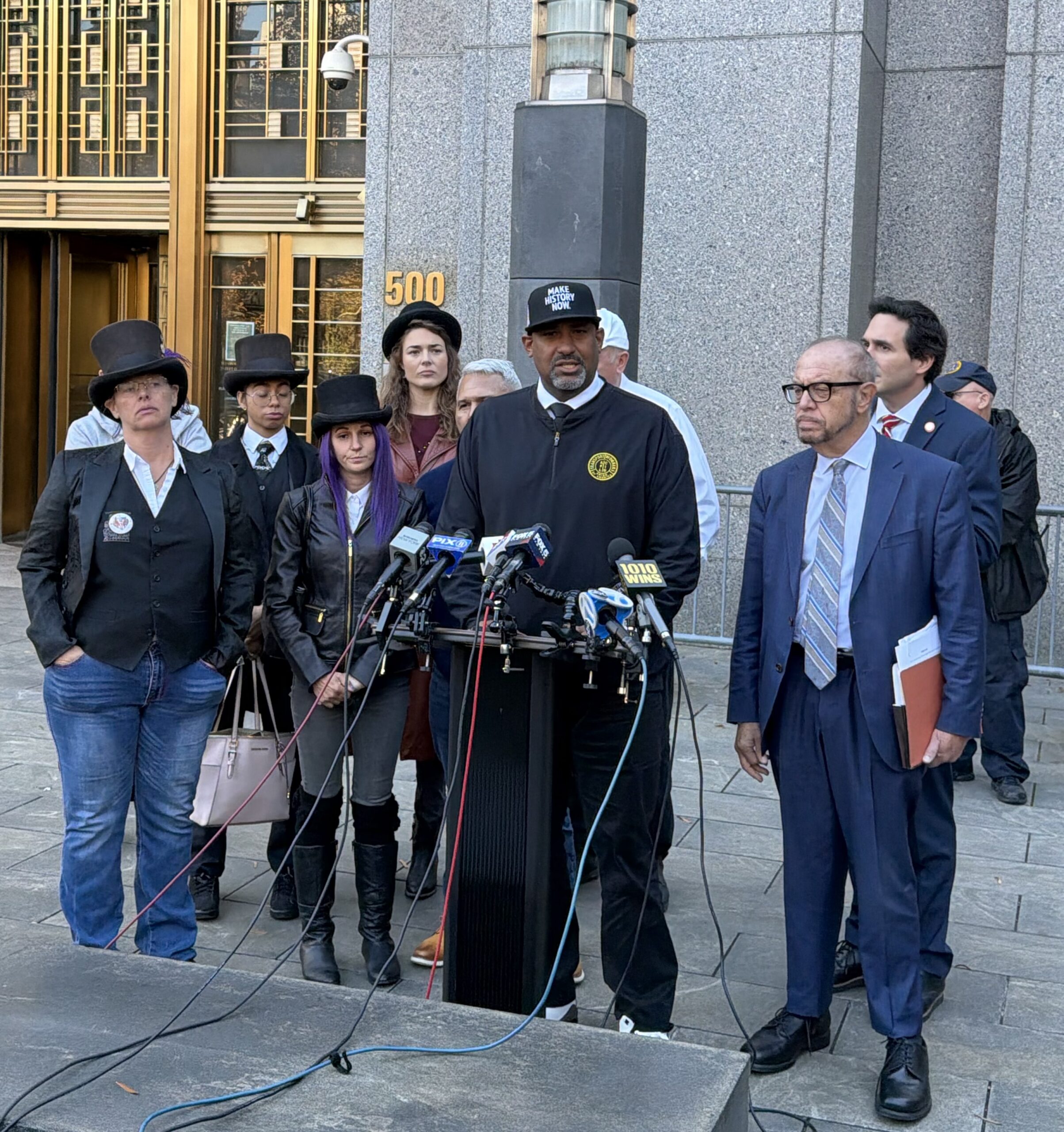
The Transport Workers Union of America and TWU Local 100 filed a class-action lawsuit in Manhattan federal court seeking to have the ban declared unconstitutional, arbitrary, and capricious. A horse-carriage medallion owner and two drivers are also named plaintiffs.
The lawsuit says the ban bill, Intro. 943, violates carriage owners and workers’ rights enshrined in the U.S. Constitution and the New York State Constitution, and goes against prior court rulings clarifying the lawful limits of the New York City Council’s authority.
“This bill is an unconstitutional abomination,” TWU International President John Samuelsen said. “It strips horse-carriage owners of the city-issued medallions that they purchased for hundreds of thousands of dollars – without mandating or guaranteeing compensation. It prohibits carriage drivers from selling their horses to carriage-ride operators in another city, or even another state where rides are permitted. And that’s just the tip of the iceberg. Despite the good intentions of the mayor, the protections he outlined recently should have been written into the legislation.”
Citing case law, the lawsuit states that the city can’t ban an entire industry and punish all participants when it has less draconian options – regulation and enforcement against individuals it believes violated the rules. The city has not only failed to show that regulation has failed but agency leaders testifying before the City Council described a well-regulated industry that has been following the rules. A Department of Consumer and Worker Protection executive knew of no license being revoked or suspended “in recent years.” The Department of Health witness testified that it directed carriage drivers to suspend operations because the weather was too hot or too cold 102 times over three years. “We have not issued violations for violating the suspension,” the official testified. No driver or carriage owner has been convicted of animal cruelty, the lawsuit also points out. The NYC carriage horses are the most regulated, most protected in the country, and will have fewer protections under this bill, the lawsuit states.
Intro 943 would prohibit carriage rides as of June 1, 2028. If the city truly believed a public safety emergency existed, it wouldn’t let carriage rides continue without any operational changes for another 20 months, the lawsuit states, relying on a recent federal court decision against the Trump Administration, which ruled against using “public safety” as pretext to get what it wanted.
It points out that e-bike crashes between 2019 and May 2026 injured 17,434 people and killed 113, “but there is no legislation banning e-bikes, nor is there any registration or licensing requirement, like there is for horse-drawn carriages.”
The City Council passed the ban bill following the June 17, 2026, death of 18-year-old Romanch Mahajan, who was killed after a carriage-horse bolted. “His death was a grievous loss, and nothing in this Complaint minimizes it. But his family, in notices of claim filed by its counsel, Ali Najmi, Chair of the Mayor’s Advisory Committee on the Judiciary, attributes the bolting to stray voltage on City infrastructure — a hazard the Local Law does not touch,” the lawsuit states.
The City and Central Park Conservancy, meanwhile, ignored years of requests by the union and workers for hitching posts to tether horses “which could have prevented the Romanch tragedy,” the lawsuit states. The fatal accident is believed to be the first since carriage rides became a feature of Central Park, which opened in 1858.
A long litany of hostility and antagonism from Council Members, including repeating insults from advocates, are detailed in the complaint, showing a fact pattern similar to DoorDash, which the City lost in the Second Circuit the August of this year.
The plaintiffs’ lawyers who filed the lawsuit are Arthur Schwartz and former New York City Council Member Benjamin Kallos.
“Council Members took an oath to ‘support the constitution of the United States.’ I never would have voted to violate the constitution, and hurt all these people,” said former Council Member Kallos, referring to the public officer oath.